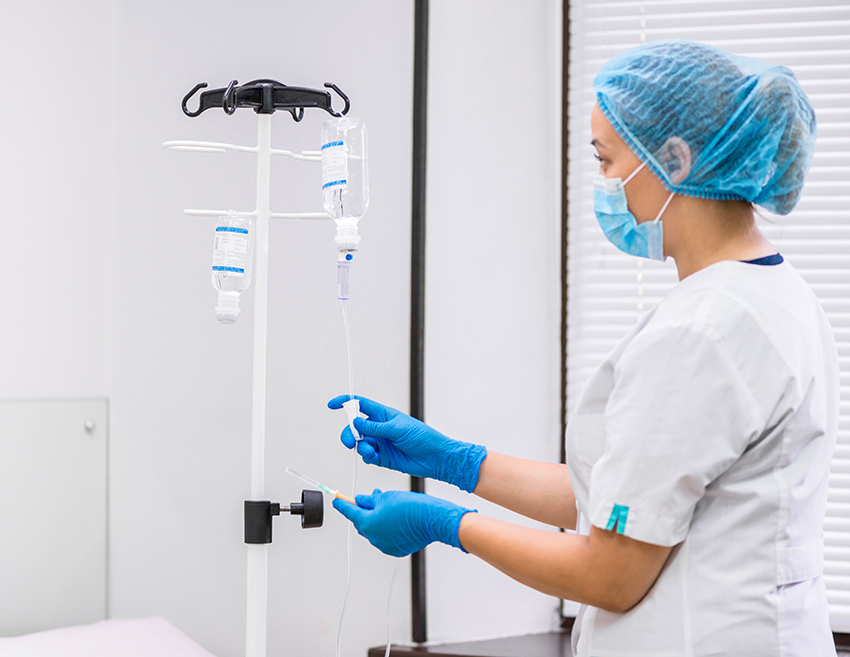
Recurrent IVF failure and Intralipid administration
In every IVF clinic, there is a group of patients who have not been able to conceive despite receiving high-quality embryos many times. Or, even if pregnancy occurs, there are always cases where the pregnancy is lost in the early stages before the pregnancy is seen on ultrasound. This is the case when there are 3 or more consecutive pregnancies despite the formation of high-quality embryos and no endometrium problems, we call it “recurrent implantation failure” or if pregnancy occurs and is lost, we call it “recurrent pregnancy loss”.
In this case, many tests are performed and sometimes random treatments are available.
These:
Systemic treatments:
- Administration of chemicals such as immunoglobulin, intralipid, heparin, aspirin, progesterone, estrogen, and granulocyte colony stimulating factor (G-CSF) to the patient before or during embryo transfer;
Those concerning the endometrium
- Damage to the uterine wall by “scratching” it one month ago using hysteroscopy
- Investigating whether the endometrium is compatible with the embryo (Endometrial Receptivity Assay – ERA)
Things that concern the embryo:
- Testing on the embryo – Selecting the most suitable embryo with embryo biopsy and genetic tests
- Transferring more embryos
This is generally a situation that makes both the doctor and the family receiving treatment very uneasy. Desperate families want to apply every kind of treatment they can find, and for this reason, periodic treatment methods are formed. Methods that have not been proven to be beneficial by healthy studies can be harmful. Among these methods, I would like to briefly explain the intralipid treatment method, which has been frequently mentioned recently.
If there are methods that are likely to be clinically beneficial, and have been studied but have not been proven to be helpful enough, and if they do not bring any cost to the patient, we do not find it objectionable to apply them. Heparin, Aspirin, and Progesterone applications are useful in special cases and do not bring any additional cost. We also see Intralipid treatment in this group. Perhaps this is why we have been hearing about it more frequently in recently
Studies are showing that patients with high antiphospholipid levels or high natural killer cell (NK) activity, and immunological or immune system problems benefit from Heparin-Aspirin and Immunoglobulin treatment. Immunoglobulin treatment is an expensive treatment and intralipid administration reduces NK activity at similar rates. Intralipid treatment is not expensive. Therefore, it has started to be used unnecessarily.
Intralipid solution is a type of nutrient liquid used to provide intravenous nutrition to patients who cannot be adequately nourished orally (cancer, coma, old age, etc.). It is a synthetic product containing 10% purified soybean oil, 1.2% egg white phospholipids, 2.25% glycerin, and water. Because soybean oil suppresses NK activity for long periods, it has created an area of use in such treatments. There is not enough research on the benefits of this treatment. However, it may be beneficial to use it in patients with high NK activity and high antiphospholipid levels.
It is usually administered in at least two doses: 5-6 days before embryo transfer (the day of egg collection is often chosen for practical purposes) and after a positive pregnancy test (approximately 2 weeks later).
According to a few recent studies on alloimmune implantation problems, it is beneficial to apply at 2-4-week intervals until the pregnancy is 24 weeks.
Because it is easy to apply and does not cost much, we see its use in patients with diagnosed immunological problems, even if its benefits are limited.
As a result, treatment methods should be planned on a patient basis. Patients must continue trying persistently. If no reason can be found to explain the failure, and if the treatment is not a burden on our patients, adding appropriate empirical methods to the treatment must be considered.